Reviewed By Dr. Tyler N Davis, DMD
Reading Time: 3 minutes
A cracked tooth does not always cause constant pain. In many cases, the discomfort comes and goes, which can make it harder to identify the source. Changes in how the tooth feels when biting, chewing, or exposed to temperature are often the earliest signs.
Table of Contents
Common Cracked Tooth Symptoms
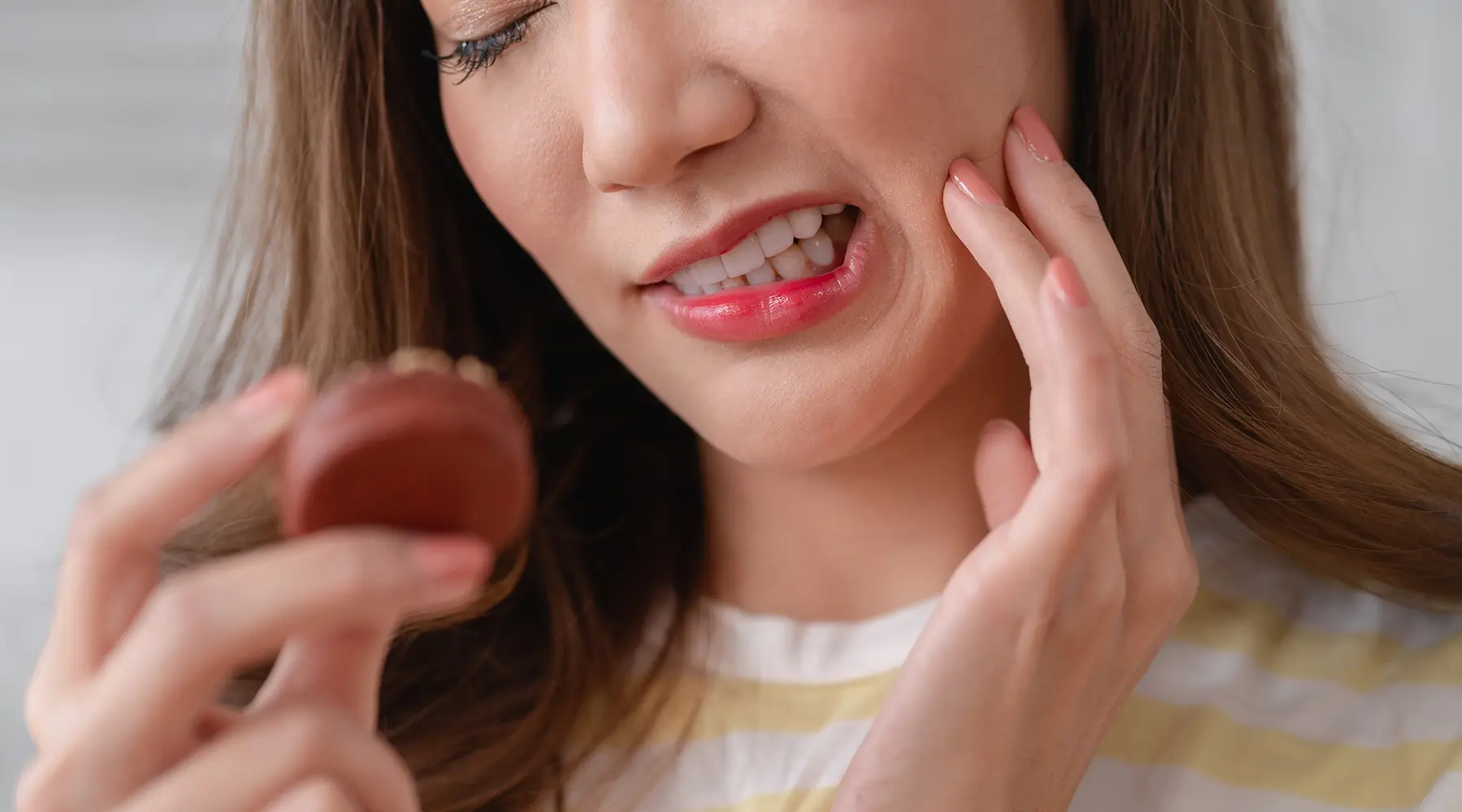
A cracked tooth often feels like sharp pain when biting down or releasing pressure, rather than continuous discomfort. The pain may be difficult to pinpoint and may not happen every time you chew.
Common sensations include:
- Sharp pain when biting or chewing
- Pain that occurs when releasing pressure
- Sensitivity to cold or hot foods
- Discomfort when eating certain foods
- Pain that seems to come and go
- A feeling that something is not quite right with the bite
This type of pain is often caused by the crack opening slightly under pressure and then closing again.
Why Cracked Tooth Pain Can Be Inconsistent
Unlike cavities, cracked teeth do not always cause steady pain. The crack may only separate when force is applied, which can irritate the inner part of the tooth.
Pain may vary depending on:
- The size and depth of the crack
- Whether the pulp inside the tooth is involved
- The direction of the crack
- The type of pressure placed on the tooth
Because of this, symptoms can be easy to overlook or mistaken for general sensitivity.
Common Causes of a Cracked Tooth
A tooth can crack when pressure exceeds what the enamel and underlying structure can handle. This may happen suddenly or develop over time with repeated stress.
Common causes include:
- Tooth fracture from injury or trauma, such as a fall or sports impact
- Biting on hard foods like ice, nuts, or hard candy
- Large fillings or weakened tooth structure, which reduce support for the tooth
- Grinding or clenching (cracked tooth syndrome), which places repeated stress on the enamel
- Previous dental procedures, including crowns or tooth extraction on nearby teeth that change bite forces
- Temperature changes, where hot and cold exposure causes the tooth to expand and contract
Inside the tooth, the blood vessels and nerves can become irritated if the crack extends deeper. Without proper care, bacteria may enter through the crack, affecting oral health and making good oral hygiene more difficult to maintain around the damaged area.
Signs the Crack May Be Getting Worse
As a crack progresses, symptoms may become more noticeable or consistent.
Watch for:
- Increasing pain when chewing
- Lingering sensitivity to temperature
- Swelling in the surrounding gum
- Pain that becomes more frequent
- Difficulty chewing on one side
- Visible lines or damage on the tooth
If bacteria enter through the crack, the tooth may develop an infection over time.
When a Cracked Tooth Needs Prompt Care
A cracked tooth should be evaluated as soon as symptoms appear, even if the pain is mild or inconsistent.
Delaying care can allow:
- The crack to deepen
- Bacteria to enter the tooth
- Infection to develop in the pulp
- The tooth to become non-restorable
Early treatment may involve bonding or a crown, while more advanced cracks may require root canal therapy or tooth extraction depending on the extent of the damage.
Dental Checkups At Power Road Dental Care
Changes in how a tooth feels when biting or chewing should not be ignored. Early assessment helps keep the tooth stable and prevent the crack from progressing further.
At Power Road Dental Care, Dr. Davis provides thorough, patient-focused dental exams using digital imaging, bite evaluation, and a clinical assessment to identify the location and extent of the crack and guide the next steps in care.
Dentist in Mesa, AZ
If you notice sharp pain when biting, sensitivity that comes and goes, or discomfort that does not feel typical, a cracked tooth may be the cause.
To book an appointment at our dental office in Mesa, AZ, call (480) 664-1438 or visit us at 2500 S Power Rd STE 102, Mesa, AZ 85209. We proudly serve patients throughout the Phoenix East Valley, including Mesa, Gilbert, Chandler, Apache Junction, and Queen Creek.
FAQs
Can a cracked tooth heal on its own?
Once a tooth is cracked, it cannot repair itself. Treatment is needed to stabilize and protect the tooth.
Why does a cracked tooth hurt when I release pressure?
When you bite down, the crack may shift slightly. Releasing pressure can cause the tooth structure to move back, which irritates the inner tissue and triggers pain. Many times pressure on release is coming from the pulp, and many times the crack propagates into the nerve (pulp).
Can a cracked tooth cause infection?
If bacteria enter through the crack, the pulp inside the tooth can become infected and may require root canal treatment.
Is a cracked tooth always visible?
Many cracks are too small to see and may only be detected during a dental exam or with imaging.